First
Movement
The first movement begins with sounds depicting the
shimmering heat and oppressive stillness on midsummer
days, followed by short bursts of wind and cries of
the cockatoos which break the hot stillness. Dry hot
winds build in intensity and the only sound which pierces
the wind is the eerie monotone cry of a native bird.
Fires
burst out, dotting the countryside and sending the people
and animals scurrying. Fear grips the townships and
residents rush about preparing their houses to defend
the fires.
Second
Movement
The second movement begins with the sound of three bells
tolling as heard in the memorial service for the victims
in the 2009 fires. It depicts the sorrow and reflection
of the nation after the devastation of the fires, which,
in the 1993-4 fire season, for the first time affected
even suburban areas of Sydney where several lives were
lost and many people were left homeless. The nation
reels back, stunned by the ferocity of the fires. Yet
through the tears there are signs of renewal and a sense
that life must go on.
Third
Movement
The final movement reflects the renewal of the bush
with new green shoots appearing after the fires and
the rebuilding of lives affected by the tragedy. The
piece begins with an ostinato figure using an 11/16
rhythm superimposed over the orchestral motives in 16/16.
This is a minimalist technique which creates intriguing
cross rhythms. The chordal theme announced after the
ostinato figure, is based on material from the end of
the first movement and has a unifying and rounding out
effect for the whole work. Quartal harmony is a feature
of the movement, lending a feeling of vigour and brightness
to the piece. After the climax point attained by the
rising fourth figures, the final coda rounds the piece
off, echoing thematic material from earlier in the piece.
 |
Sample
Tracks - Firestorm Symphony
First
Movement
Second
Movement
Third
Movement
*
Please note, music samples are presented as
an MP3 file and will be heard through your media
player.
You
can download the track by right clicking on
your mouse and selecting Save Target
As ..then select a location to save
the file.
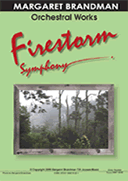
A recording of this work by the Moravian Philharmonic Orchestra ( Czech Republic) is available on Margaret's SENSATIONS CD. (MMP 6041)
Click here to purchase this album.
Purchase
the CD and Score
by clicking here
|
| |
An
A4 study score and recording is now available from
your local music store or from this website..
A3 Conductor's Score and parts
hire available from
the Australian Music Centre. www.amcoz.com.au
|